Key Takeaways (Vulcanized vs. Cold Cemented Process Comparison)
- Cost & Tooling: Vulcanized shoes offer low mold costs and flexible sizing setups; cold cemented shoes require higher mold investments for one-piece outsoles, making them suitable for large-volume orders.
- Durability: Vulcanized shoes undergo high-temperature chemical cross-linking, achieving peel strength ≥40 N/cm with high flex resistance; cold cemented shoes rely heavily on adhesive quality and pressure molding.
- Hardness & Cushioning: Vulcanized outsoles provide a solid feel (Shore A 60°-65°) and strong lateral support; cold cemented outsoles integrate EVA/Phylon (Shore A 45°-55°) for lightweight cushioning.
- Category Selection: Streetwear brands and vintage workwear suit vulcanized construction; lightweight casual and platform shoes favor cold cement construction. Okeshoe supports your brand with flexible orders starting at 500 pairs.
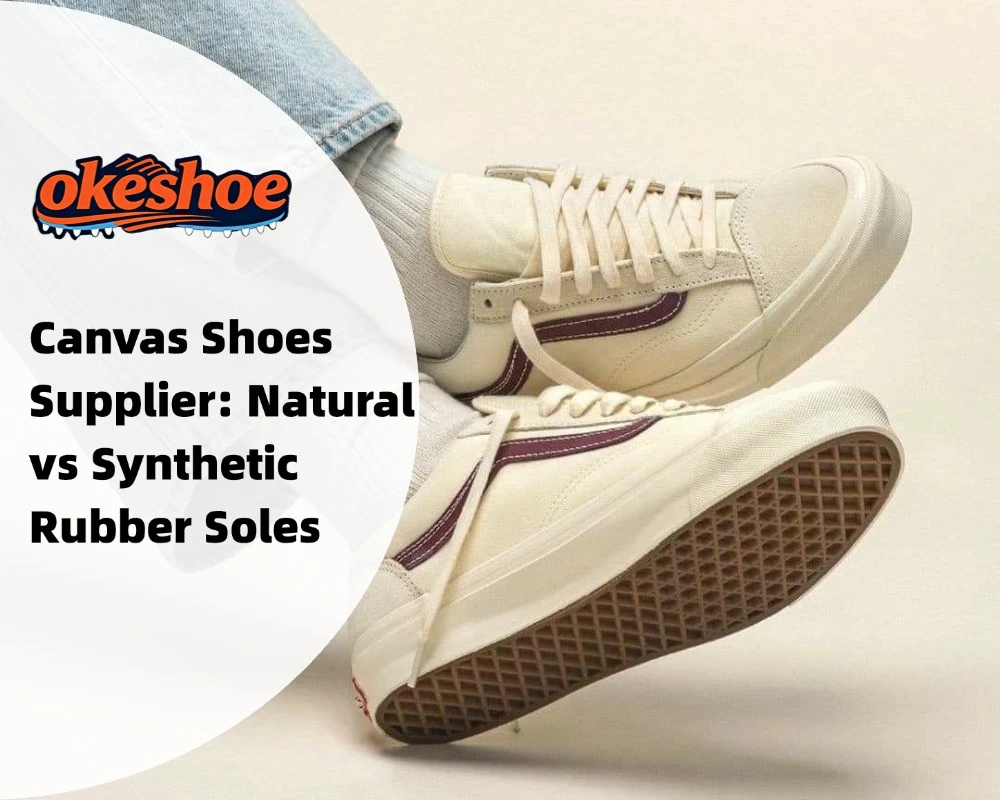
Selecting the right manufacturing process directly determines brand positioning, quality stability, and profit margins in footwear sourcing. As a professional canvas shoes manufacturer, Okeshoe frequently receives inquiries from global B2B buyers regarding bottoming techniques. Vulcanized and cold cemented (cold bonded) processes represent the two leading construction methods in modern footwear manufacturing, exhibiting distinct physical properties, durability, tooling costs, and wearing comfort. Partnering with an experienced canvas shoes factory involves evaluating not only production scale but also how well their manufacturing capabilities align with your product line. This guide evaluates process principles, durability, cost structures, comfort profiles, and factory customization support to help B2B buyers make optimal sourcing decisions.
Manufacturing Principles & Process Workflows
- Vulcanized Process (Chemical Cross-Linking): Unvulcanized green rubber compounded with sulfur and curing agents is applied to the outsole and foxing tape, then placed inside an autoclave machine. Under high temperatures (110°C–140°C) and elevated pressure for dozens of minutes, the rubber polymer chains break and form a 3D cross-linked network. This chemically fuses the outsole, foxing tape, and canvas upper into a unified structure.
- Cold Cemented Process (Mechanical Bonding): Pre-molded outsoles (such as rubber, EVA, TPR, or PU bottoms) and finished canvas uppers are prepared separately. Solvent-based or waterborne PU adhesives are applied at room temperature, passed through a heat activation tunnel, and pressed under high pressure using a hydraulic sole-attaching machine without entering an autoclave.
- Core Manufacturing Philosophies: The vulcanized process emphasizes high-temperature chemical bonds for robust anti-delamination performance and authentic vintage aesthetics. In contrast, the cold cemented process focuses on multi-material integration and precise shape molding without imposing heat-resistance limitations on upper materials.
💡 Frequently Asked Questions
Q: What is the primary difference between vulcanized and cold cemented processes?
A: The fundamental difference lies in bonding mechanism and processing temperature. Vulcanized footwear relies on high-temperature autoclave curing to create chemical cross-linking between rubber and canvas. Cold cemented footwear uses room-temperature chemical adhesives combined with hydraulic pressing to bond pre-formed soles to the upper.

Outsole Structures & Product Durability Comparison
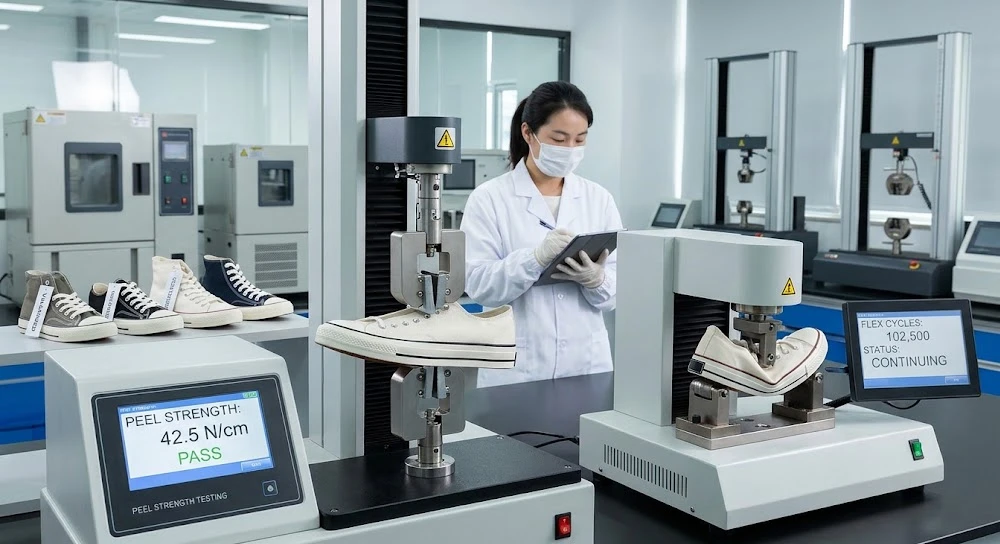
- Peel Strength & Flex Resistance: According to third-party testing standards (such as SGS), the peel strength between the foxing tape and upper on vulcanized shoes reaches ≥40 N/cm, exceeding standard footwear compliance benchmarks. Cold cemented shoes typically average 30-35 N/cm. Under exposure to moisture, heat, or extended flex testing exceeding 100,000 cycles, cold cemented adhesive layers face a higher risk of edge delamination over time.
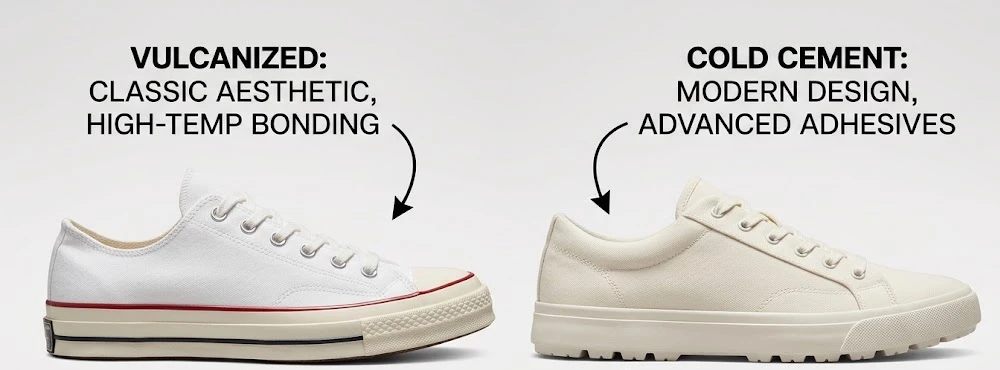
- Visual Characteristics & Finishing Details: Vulcanized shoes feature iconic rubber toe caps, multi-layered foxing tapes, and heel badges. Minor rubber bleed lines along the sole edges are a natural outcome of heat curing, giving the footwear a classic handcrafted appearance. Cold cemented shoes display clean, sharp cutlines with no foxing tape, showcasing precise adhesive line control.
- Structural Stability: High-temperature vulcanization allows raw rubber to penetrate deep into canvas fibers, preventing sole separation. The long-term durability of cold cemented shoes depends heavily on adhesive formulation, drying temperatures, and pressure distribution during pressing.
| Evaluation Metric | Vulcanized Process | Cold Cemented Process |
| Bonding Mechanism | High-temp chemical cross-linking | Chemical adhesive + pressure pressing |
| Average Peel Strength | ≥40 N/cm (Exceptional anti-delamination) | 30-35 N/cm (Dependent on glue quality) |
| Flex Resistance | Superior; highly resistant to cracking | Good; subject to adhesive aging |
| Visual Features | Foxing tape, toe cap, vintage look | No foxing tape, clean molded lines |
| Heat/Humidity Resistance | High stability under climate shifts | Glue aging accelerates in heat/humidity |
💡 Frequently Asked Questions
Q: Why are vulcanized canvas shoes less prone to sole separation than cold cemented shoes?
A: Vulcanized shoes undergo molecular-level cross-linking inside an autoclave, forcing raw rubber into the canvas fibers to form an integrated structure. Cold cemented shoes rely on surface-level chemical glues, which are more susceptible to edge peeling under repeated flexing or moisture exposure.
Tooling Costs, Minimum Order Quantities & Lead Times
- Initial Tooling Investment: Vulcanized outsoles are built from calendered rubber sheets and extruded foxing tapes, keeping aluminum or steel mold costs low and sizing setups flexible. Cold cemented shoes require custom-molded outsoles (such as TPR, EVA, or unit soles); developing individual injection molds for every shoe size significantly increases upfront tooling expenses.
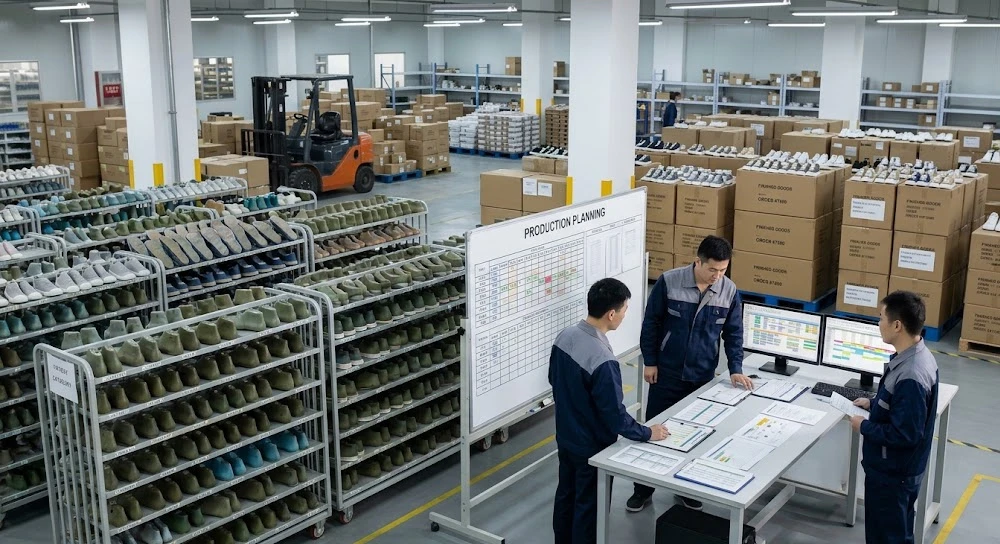
- Minimum Order Quantity (MOQ) Requirements: Conventional cold cement factories enforce high minimums of 1,500 to 3,000 pairs per style to amortize mold and machine setup costs. As a specialized canvas shoes factory, Okeshoe offers flexible production models with low MOQs starting at 500 pairs for both vulcanized and cold cemented lines.
- Production Schedules & Delivery Security: The vulcanized workflow follows structured autoclave curing and cooling cycles. Cold cement assembly lines offer rapid throughput once molds are set up. Utilizing 10 production lines and 200+ experienced workers, Okeshoe delivers an annual output exceeding 1.5 million pairs, ensuring fast reorders and reliable lead times.
💡 Frequently Asked Questions
Q: Should emerging footwear brands choose vulcanized or cold cemented construction?
A: Brands focused on classic retro, skate, or casual streetwear with lower initial tooling budgets should choose vulcanized construction. Brands prioritizing lightweight cushioning, complex sole profiles, and larger budgets should opt for cold cement construction.
Outsole Hardness & Footwear Style Matching
- Outsole Hardness & Material Properties: Vulcanized outsoles use natural and synthetic rubber blends maintained at Shore A 60°-65°, offering a grounded feel and strong traction. Cold cemented outsoles utilize materials like EVA, PU, or Phylon, reducing hardness to Shore A 45°-55° for enhanced energy return and shock absorption.
- Weight & Underfoot Response: Vulcanized soles provide firm lateral support and high abrasion resistance under heavy wear. Cold cemented outsoles reduce total shoe weight by 20% to 30% compared to same-size vulcanized shoes, providing a lightweight wearing experience.
- Footwear Style & Category Compatibility:
- Vulcanized Construction: Ideal for classic high-top/low-top skate shoes, street fashion sneakers, and vintage workwear footwear.
- Cold Cement Construction: Suitable for modern lightweight casual sneakers, platform canvas shoes, chunky dad-shoe profiles, and walking footwear.
💡 Frequently Asked Questions
Q: How do vulcanized and cold cemented shoes differ in wear feel and application scenarios?
A: Vulcanized outsoles are firm, durable, and slip-resistant with strong lateral support, making them ideal for skateboarding and street fashion. Cold cemented outsoles integrate lightweight EVA materials for superior cushioning and lighter weight, making them ideal for long-distance walking and modern lifestyle footwear.
Okeshoe Factory Capabilities & Customization Support
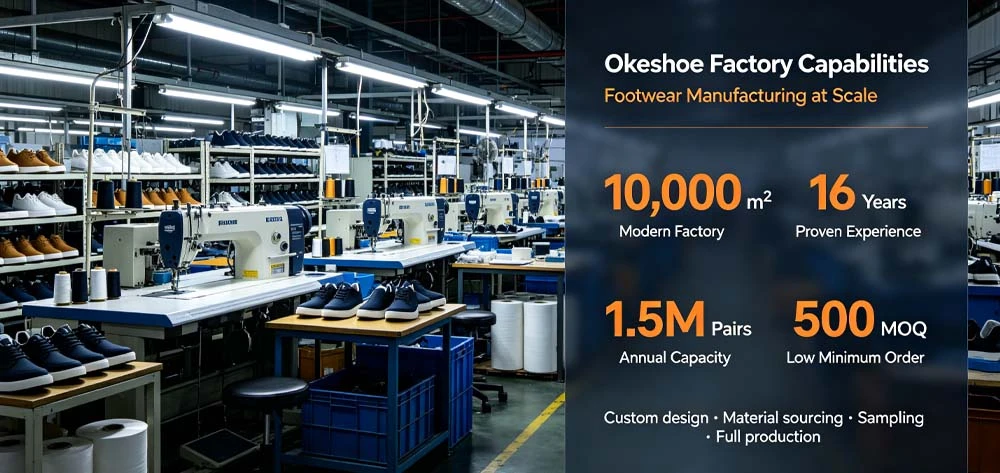
With 16 years of manufacturing expertise, Okeshoe operates a 10,000-square-meter modern facility equipped with robust dual-process manufacturing infrastructure. Our canvas shoes manufacturer facility runs automated autoclave systems alongside precision cold cement assembly lines, enabling buyers to select or combine both construction methods based on product positioning.
- Factory Manufacturing Capacity & Infrastructure:
- Facility Scale: Features a 10,000 m² plant footprint, 10 specialized assembly lines, and 150 stitching lines.
- Workforce & Output: Powered by 200+ skilled shoemaking technicians, delivering an annual capacity exceeding 1.5 million pairs with fast order replenishment.
- Certified Quality Control: Factory operations and quality management systems are certified by third-party inspection bodies including BV, TUV, and SGS.
- Comprehensive Component Customization:
- Uppers & Textiles: Heavyweight cotton canvas, organic cotton, washed canvas, and recycled (rPET) canvas fabrics.
- Printing & Graphics: High-definition Direct-to-Garment (DTG) digital printing, screen printing, embroidery, and heat transfer options.
- Hardware & Accents: Custom tongue labels, ergonomic insoles (EVA/Ortholite), foxing heel badges, metal eyelets, and branded laces.
- Packaging & Low MOQs: Fully customized shoe boxes, dust bags, and shipping cartons with low MOQs starting from 500 pairs.
💡 Frequently Asked Questions
Q: How can international buyers conduct remote factory audits and ensure bulk quality?
A: Buyers can review third-party audit and physical test reports issued by SGS, TUV, or BV. Okeshoe provides live video facility walkthroughs, pre-production sample approvals, and final inline inspections to ensure mass production matches global quality standards.
Contact Okeshoe for Free Samples & Custom Manufacturing Solutions
Planning your next canvas footwear collection? Contact the Okeshoe engineering team today to receive sample teardowns and competitive B2B factory pricing!
| OEM&ODM Factory | Email: sandy@okeshoe.com | WhatsApp:+86 13328871615 |
Understanding the structural, cost, and functional differences between vulcanized and cold cemented processes is essential for building a profitable canvas shoe line. Vulcanized construction dominates street fashion and vintage markets through its classic aesthetics and anti-delamination durability. Cold cement construction excels in modern lifestyle footwear through its lightweight cushioning and design flexibility. Backed by 16 years of production experience, a 10,000 m² facility, and strict compliance with international testing standards, Okeshoe serves as a reliable manufacturing partner for B2B footwear buyers worldwide.