Key Takeaways
- Natural rubber offers good elasticity, flexibility, and grip, making it suitable for canvas shoes designed for everyday comfort and traction.
- Synthetic rubber provides greater formulation flexibility, allowing manufacturers to adjust abrasion resistance, oil resistance, heat resistance, and dimensional stability according to product requirements.
- Rubber sole quality should be evaluated through standardized tests covering abrasion resistance, hardness, flex resistance, and upper-to-sole bonding strength.
- For bulk purchasing, buyers should assess not only sole materials but also upper construction, printing quality, dimensional consistency, and batch-to-batch stability.
- A reliable canvas shoes supplier should have sufficient production capacity, documented quality control procedures, and the ability to maintain consistent product specifications across bulk orders.
The rubber sole is one of the most important components affecting the durability, flexibility, grip, and overall performance of canvas shoes. Although natural and synthetic rubber may look similar after processing, their material properties and suitability for different applications can vary considerably.
For wholesalers, footwear brands, and importers, selecting the right rubber compound is therefore an important part of bulk purchasing. An unsuitable sole formulation may lead to premature wear, insufficient flexibility, poor bonding, or inconsistent product quality.
Understanding the differences between natural and synthetic rubber helps buyers establish clearer material specifications and evaluate manufacturing capabilities. This guide compares their key properties, explains essential testing methods, and outlines how to assess the quality of bulk canvas shoes before placing an order.
Performance Comparison: Natural vs. Synthetic Rubber Soles
Natural Rubber Soles
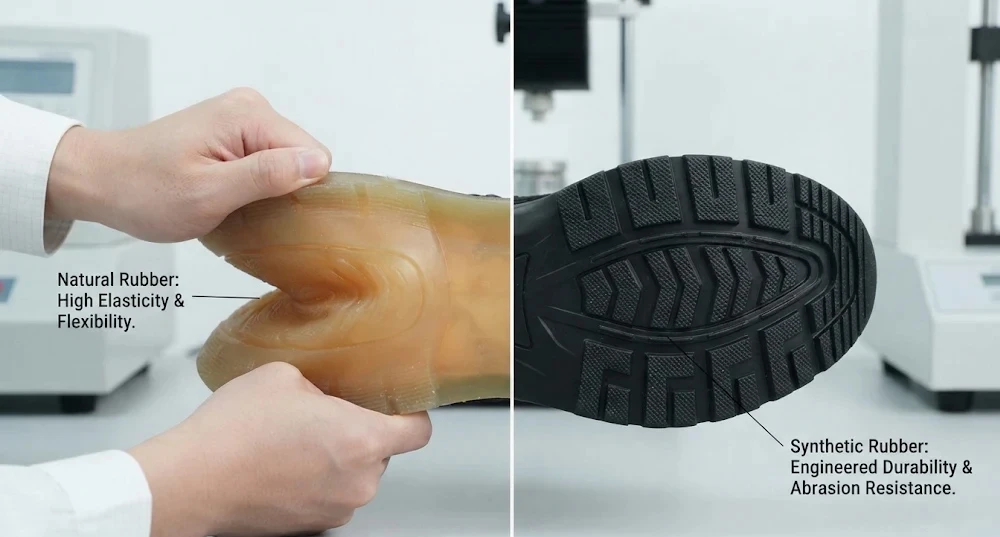
Natural rubber is valued for its elasticity, flexibility, and grip. Its ability to recover after deformation makes it suitable for canvas shoes that require comfortable movement and reliable traction. However, its resistance to oil, heat, and aging may be limited depending on the formulation and vulcanization process.
Synthetic Rubber Soles
Synthetic rubber allows manufacturers to adjust material properties through different polymer types and compound formulations. It can be engineered to improve abrasion resistance, oil resistance, heat resistance, and dimensional stability, making it suitable for products with specific performance requirements and large-scale production needs.
Natural Rubber vs. Synthetic Rubber: A Procurement Comparison
| Evaluation Factor | Natural Rubber | Synthetic Rubber |
|---|---|---|
| Elasticity | Generally high | Depends on polymer formulation |
| Flexibility | Good flexibility and resilience | Can be adjusted according to application |
| Abrasion Resistance | Varies by compound | Can be optimized through formulation |
| Grip | Generally good traction | Depends on material and tread design |
| Oil Resistance | Generally limited | Can be improved with suitable polymers |
| Aging Resistance | More sensitive to environmental conditions | Can be formulated for improved aging resistance |
| Production Consistency | Requires controlled sourcing and processing | Formulation offers greater control over specifications |
| Typical Applications | Casual and comfort-oriented canvas shoes | Shoes requiring specific durability and performance characteristics |
The choice should be based on the intended use, target price, required service life, and performance specifications rather than material type alone. Some manufacturers also combine different rubber materials to balance flexibility, durability, and production cost.
Frequently Asked Questions
Q: Is natural rubber always more durable than synthetic rubber?
A: No. Durability depends on the rubber formulation, compound quality, processing conditions, and actual use environment. Both materials can deliver suitable performance when properly formulated and tested.
Rubber Sole Quality Testing Methods
Rubber sole performance should be verified through measurable testing rather than visual inspection alone. For bulk orders, buyers can specify the following tests in their product requirements:
- Abrasion Resistance: Evaluate material wear using ISO 4649. Lower volume loss generally indicates better resistance to abrasion.
- Rubber Hardness: Measure hardness with a Shore A durometer to assess the balance between firmness, flexibility, and comfort.
- Flex Resistance: Use an applicable footwear flexing method, such as ISO 17707, to evaluate cracking and cut growth after repeated bending.
- Upper-to-Sole Bonding Strength: Use ISO 17708 to assess the separation strength between the upper and outsole and identify potential bonding weaknesses.
Okeshoe’s Testing and Quality Verification
The following figures can be used as recommended reference targets when developing rubber sole quality specifications for canvas shoes. They are suggested procurement control values, not universal pass criteria established by the test standards or verified test results from Okeshoe.
| Testing Item | Testing Method | Data to Record / Reference Target |
|---|---|---|
| Abrasion Resistance | ISO 4649 | Volume loss: ≤150 mm³ |
| Rubber Hardness | Shore A Durometer | Hardness: 60–70 Shore A |
| Flex Resistance | ISO 17707 | Cut growth: ≤4 mm after 30,000 flex cycles |
| Upper-to-Sole Bonding Strength | ISO 17708 | Bond strength: ≥3.0 N/mm |
These targets should be adjusted according to the rubber compound, outsole construction, shoe category, and buyer’s technical requirements. The applicable test conditions and specimen preparation should also be specified to ensure comparable results.
For a canvas shoes manufacturer, maintaining traceable test records is important for monitoring material consistency and identifying production deviations. Buyers should request test reports that include the testing method, measured values, sample identification, and inspection date rather than relying solely on general quality claims.
Frequently Asked Questions
Q: Should every bulk canvas shoe order undergo rubber sole testing?
A: Testing requirements depend on order specifications and product risk. At minimum, buyers should establish material and performance criteria before mass production and conduct appropriate verification during sample approval and production inspection.

Material Selection Strategies for Bulk Custom Canvas Shoes
Choosing between natural and synthetic rubber requires consideration of the product’s intended application, target market, and overall construction. A material that performs well in one shoe category may not be the most suitable option for another.
Select Rubber Materials According to Product Positioning
Different types of canvas shoes have different outsole performance requirements. Buyers should first identify the product’s primary application and then determine which rubber properties should be prioritized.
| Product Type | Key Performance Requirements | Material Selection Focus |
|---|---|---|
| Everyday Casual Canvas Shoes | Flexibility, elasticity, and grip | Evaluate natural rubber and suitably formulated synthetic rubber compounds |
| Fashion Canvas Shoes with Printed Designs | Appearance consistency, flexibility, and structural stability | Balance outsole color, tread design, and material performance |
| Canvas Shoes for Frequent Wear | Abrasion resistance, flex resistance, and bonding strength | Prioritize verified abrasion and flex test results |
| Functional Canvas Shoes | Specific hardness, oil resistance, or other performance properties | Select the appropriate rubber compound according to the intended use environment |
Product positioning alone does not determine the final rubber material. For example, everyday casual canvas shoes can use either natural rubber or synthetic rubber with an appropriate formulation. The final selection should be based on actual performance test results.
Ensure Compatibility Between Upper and Outsole Materials
Canvas shoes typically consist of several components, including the upper, toe foxing, midsole, and outsole. The materials and construction of these components must be properly matched to ensure overall product performance.
When developing customized footwear, buyers should pay particular attention to the following factors:
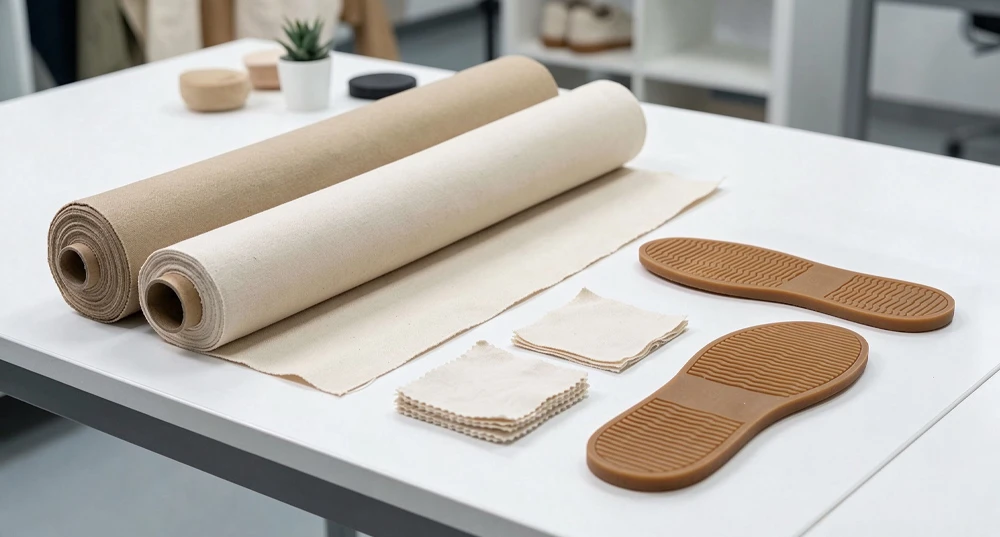
- Canvas Fabric: Select fabrics with suitable thickness, density, and weave structure according to product positioning. Verify abrasion resistance, colorfastness, and suitability for printing.
- Outsole Hardness: Determine an appropriate hardness level based on the shoe construction and intended use. Excessively hard or soft outsoles may compromise overall wearing performance.
- Sole Bonding Process: Select suitable adhesives and surface treatment methods according to the rubber type, surface condition, and upper material.
- Outsole Construction: Optimize outsole thickness, tread patterns, and forefoot flex zones to balance appearance and functional performance.
For custom print canvas shoes, the fabric should provide a suitable printing surface and maintain color consistency. At the same time, the outsole compound and bonding process must be compatible with the upper material to reduce the risk of separation during wear.
A well-matched upper and outsole help maintain the shoe’s appearance, structural stability, and functional performance throughout its expected service life.
Frequently Asked Questions
Q: What should buyers prioritize when selecting rubber soles for custom canvas shoes?
A: Buyers should first define the intended application and performance requirements, then evaluate abrasion resistance, flexibility, hardness, grip, bonding compatibility, and material cost together.
What Quality Factors Should Buyers Evaluate When Purchasing Canvas Shoes in Bulk?
Bulk purchasing requires a broader quality assessment than checking individual samples. Buyers should establish consistent inspection criteria covering materials, workmanship, dimensions, and production batches.
Five Key Dimensions of Whole-Shoe Quality Evaluation
- Outsole Material and Performance: Check rubber composition, hardness, abrasion resistance, flexibility, tread definition, and bonding strength against the approved specifications.
- Upper Material and Printing Quality: Inspect canvas density, fabric consistency, color accuracy, print clarity, and resistance to peeling or fading.
- Construction and Workmanship: Examine stitching density, seam alignment, adhesive application, toe-cap attachment, heel construction, and overall finishing.
- Sizing and Appearance Consistency: Verify shoe length, width, symmetry, color matching, and dimensional tolerances against the approved size specifications and reference samples.
- Batch Consistency and Final Inspection: Compare products across production batches and inspect workmanship, appearance, labeling, packaging, and order quantities before shipment.
For larger orders, buyers can also agree on an acceptance sampling plan based on ISO 2859-1. The applicable inspection level and AQL should be determined according to product risk, order volume, and the buyer’s quality requirements.
A clear inspection checklist helps both parties apply consistent standards and reduces disputes caused by subjective judgments during shipment acceptance.
Frequently Asked Questions
Q: How can buyers reduce quality differences between bulk production batches?
A: Approve a reference sample, document material and dimensional specifications, establish inspection criteria, and conduct production-stage and pre-shipment inspections. These measures help identify deviations before the products are delivered.

Okeshoe’s Manufacturing and Quality Control
As a footwear manufacturer in China, Okeshoe provides production support for canvas shoes and other customized footwear projects. Its manufacturing capabilities and quality management processes are designed to support wholesale orders while maintaining consistent product specifications.
Manufacturing Capacity and Production Resources
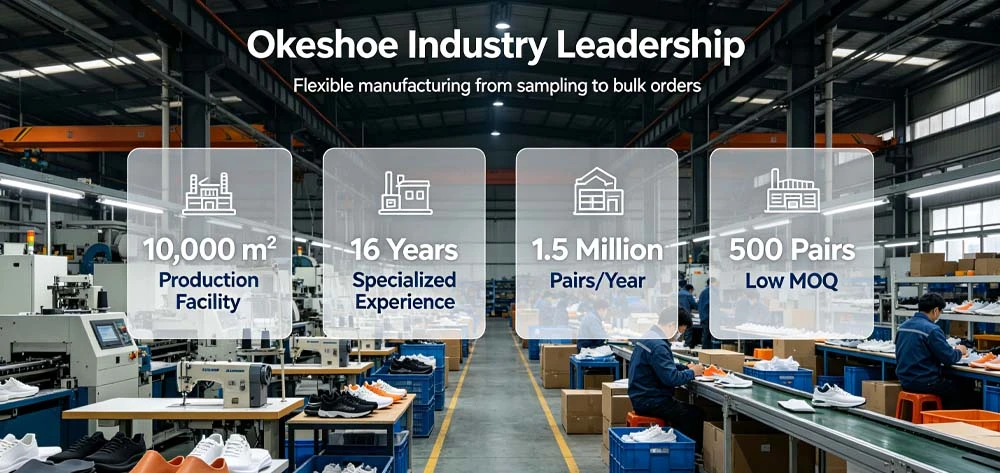
Okeshoe has 16 years of footwear manufacturing experience and operates a factory covering approximately 10,000 square meters. Its production resources include:
- 200+ production employees supporting manufacturing and related operations.
- 10 production lines for organized order processing.
- Annual production capacity exceeding 1.5 million pairs, supporting bulk orders and replenishment requirements.
- MOQ starting from 500 pairs, providing an order threshold for wholesale and brand purchasing projects.
These resources provide a production foundation for buyers evaluating a canvas shoes factory, particularly when order volume, manufacturing coordination, and delivery planning are important considerations.
Quality Control and Inspection Support
Quality management should cover the entire manufacturing process, from incoming materials to finished products. For canvas shoes, key control points include:
- Material Inspection: Check canvas fabrics, rubber compounds, accessories, and other incoming materials against approved specifications.
- Production Monitoring: Monitor cutting, stitching, sole preparation, bonding, and assembly to identify workmanship deviations.
- Sole Performance Verification: Evaluate relevant properties such as hardness, abrasion resistance, flex resistance, and bonding strength according to product requirements.
- Finished Product Inspection: Check dimensions, appearance, construction, consistency, and packaging before shipment.
- Third-Party Inspection Support: Support inspection and testing arrangements involving organizations such as BV, TÜV, and SGS when required by the project.
For buyers comparing a canvas shoes supplier, factory scale should be considered alongside its ability to implement documented quality procedures and provide verifiable inspection records. Production capacity alone does not guarantee product consistency; effective process control and clear acceptance standards are equally important.
Frequently Asked Questions
Q: What information should buyers request from a canvas shoes factory before placing a bulk order?
A: Buyers should request factory and production information, material specifications, approved samples, quality inspection procedures, relevant test reports, MOQ details, and production lead-time estimates.
Looking for a reliable canvas shoes supplier for your wholesale collection? Contact Okeshoe to discuss your product requirements, material specifications, and bulk production plans.
| OEM&ODM Factory | Email: sandy@okeshoe.com | WhatsApp:+86 13328871615 |
Natural and synthetic rubber each offer distinct advantages for canvas shoe production. Natural rubber is valued for its elasticity and grip, while synthetic rubber provides greater flexibility in adjusting specific performance properties. The right choice depends on product positioning, usage conditions, quality requirements, and cost considerations.
For bulk buyers, material selection should be supported by standardized testing, whole-shoe quality evaluation, and consistent production controls. Working with an experienced canvas shoes manufacturer that can provide adequate manufacturing capacity and traceable quality management helps reduce procurement risks and maintain product consistency across large orders.