Key Takeaways
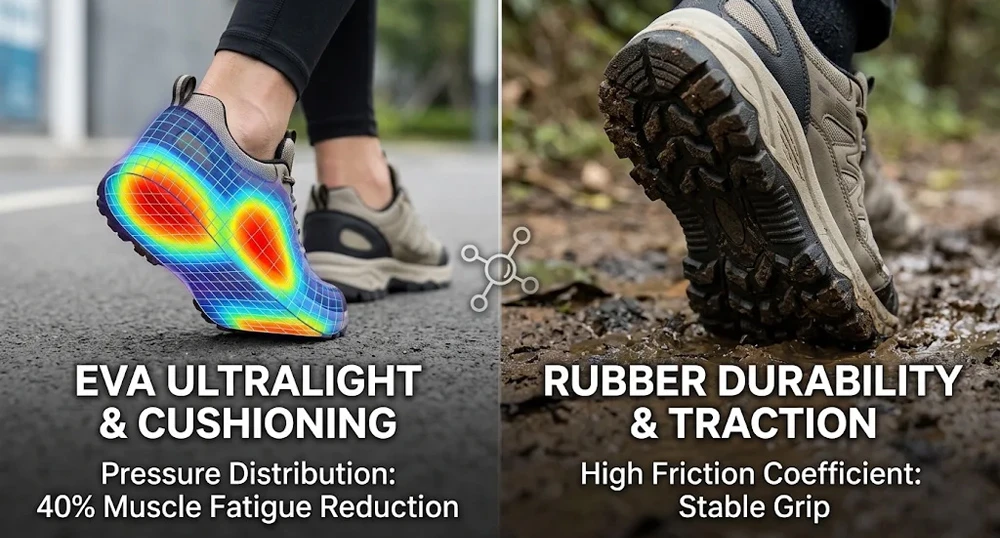
- Weight & Cushioning Selection: EVA material features extreme lightweight characteristics (density 0.15–0.35 g/cm³) and superior shock absorption, making it the top choice for daily commuting casual footwear where ultimate comfort is prioritized.
- Durability & Traction Selection: Rubber outsoles possess a dense physical structure that excels in abrasion resistance (DIN loss < 100 mm³) and wet surface grip (friction coefficient of 0.55–0.75), rendering them suitable for high-frequency wear and rough terrain.
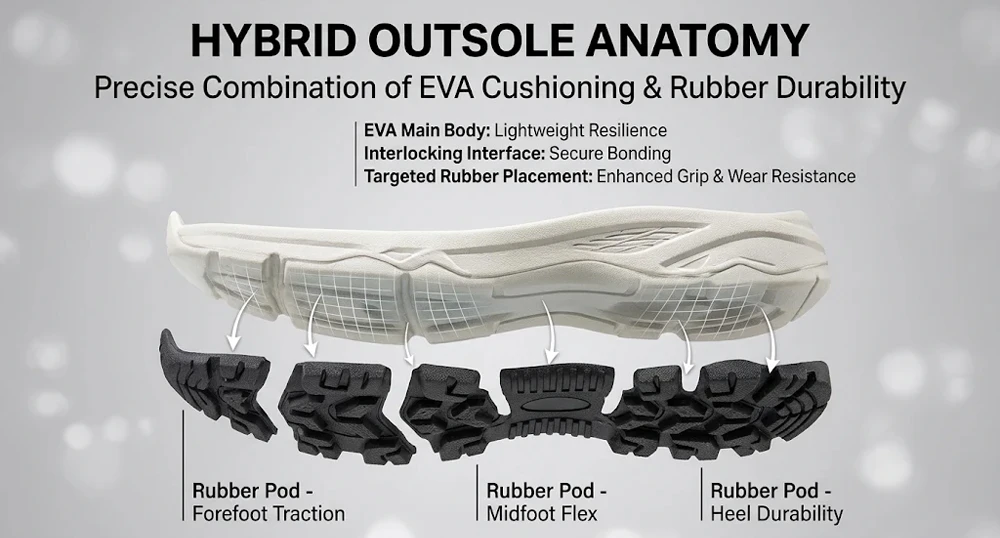
- Balanced Performance Solution: The ideal option for brands seeking both lightweight wear and long-term durability is a hybrid construction (EVA cushioning midsole + rubber tread patch), which significantly reduces overall shoe weight while extending product lifespan.
- Factory Capabilities & Support: As a leading casual shoes factory with 16 years of manufacturing experience, Okeshoe operates a 10,000 m² facility, 10 production lines, and a workforce of 200+ skilled workers, delivering an annual capacity of 1.5 million pairs with a low minimum order quantity (MOQ) of 500 pairs for rapid sampling and reorders.
In the product development and bulk purchasing of casual footwear, outsole selection directly determines product performance, wearing comfort, and market positioning. As an experienced casual shoes manufacturer, we are frequently asked by brand buyers: Which outsole material is truly better for custom casual footwear—EVA or rubber? The reality is that neither material is universally superior; the right choice depends entirely on your brand’s market positioning, budget parameters, and intended end-use scenarios.
Whether you are an independent designer brand looking for high-performance custom casual shoes engineering or an established distributor seeking a reliable casual shoes supplier, gaining a thorough understanding of the physical properties and production techniques of these two core sole materials will grant your product line a distinct competitive advantage.
Fundamental Comparison of EVA and Rubber Materials
EVA (Ethylene-Vinyl Acetate) and rubber differ fundamentally in their molecular architecture and processing methods, which directly dictates their physical performance on finished footwear.
Core Physical Properties of EVA Outsoles
EVA is a lightweight, microcellular polymer foam. Its interior structure is filled with tiny closed air cells that grant EVA outsoles high resilience and ultra-lightweight performance. In casual footwear manufacturing, EVA effectively absorbs ground impact forces while substantially reducing overall shoe weight.
Core Physical Properties of Rubber Outsoles
Rubber—encompassing both natural and synthetic variants—is a vulcanized elastomeric polymer. Rubber outsoles feature an extremely dense physical structure, exhibiting outstanding tensile strength, tear resistance, and top-tier abrasion resistance. Furthermore, rubber maintains dependable traction across diverse wet and slippery surfaces.
Comparative Performance Data Matrix
The following table outlines comparative laboratory physical performance data for both materials:
| Physical Performance Metric | EVA Outsole | Rubber Outsole |
| Material Density | 0.15 – 0.35 g/cm³ (Ultra-Light) | 1.1 – 1.4 g/cm³ (Dense) |
| Hardness (Shore A) | 45A – 65A (Soft & Flexible) | 55A – 75A (Tough & Durable) |
| DIN Abrasion Loss | 150 – 250 mm³ | < 100 mm³ (Superior Resistance) |
| Wet Friction Coefficient | 0.3 – 0.45 (Standard) | 0.55 – 0.75 (High Traction) |
💡 Frequently Asked Questions
- Q: What is the main difference between EVA and rubber outsoles for custom casual shoes?
- A: EVA excels in extreme lightweight comfort (with a density roughly one-fourth that of rubber) and superior cushioning, making it ideal for daily walking shoes; rubber performs far better in abrasion resistance (DIN wear under 100 mm³) and wet-surface traction, making it suited for high-frequency, heavy-duty casual footwear.

Essential Performance Factors for Casual Shoes Sole Selection
When evaluating sole construction options for custom casual footwear, brand procurement teams must carefully balance comfort, durability, and manufacturing efficiency.
Weight, Cushioning, and Everyday Comfort Impact
Footbed comfort directly drives consumer repeat purchases. EVA foam soles reduce feet load burden by up to 40%, effectively alleviating muscle fatigue during prolonged walking. For custom casual shoes positioned for daily commuting or urban lifestyle, EVA offers an inherent lightweight advantage.
Durability, Traction, and Weather Resistance
For outdoor environments, wet weather, or rugged surfaces, rubber outsoles remain irreplaceable. Rubber exhibits high weather stability, resisting embrittlement in extreme heat or freezing temperatures. Its superior grip and wear resistance extend product longevity, ideal for heritage casual boots and classic skate sneakers.
Manufacturing Cost and Customization Versatility
From a manufacturing perspective, pure EVA unit soles require lower tooling development costs and shorter molding cycles, allowing easy color formulation and tread embossing. While rubber outsoles incur slightly higher mold investments, precise compounding allows for versatile aesthetic finishes, including translucent rubber, gum soles, and recycled eco-rubber compounds.
💡 Frequently Asked Questions
- Q: Can a casual shoes manufacturer combine EVA and rubber in one outsole?
- A: Yes. A professional casual shoes factory typically recommends a hybrid construction combining an EVA cushioning midsole with a rubber tread outsole. This design retains EVA’s lightweight comfort while leveraging rubber pods to enhance durability and grip in high-wear zones.
Tailored Outsole Selection Guide for Brand Purchasing
To align with distinct product positioning and target buyer demographics, procurement teams should adopt targeted sole specification strategies.
Best Applications for Pure EVA and Rubber Soles
- Ideal Applications for Pure EVA: Minimalist daily commuting sneakers, ultra-light travel shoes, indoor casual footwear, and fast-fashion lifestyle lines.
- Ideal Applications for Pure Rubber: Heritage skate shoes, vulcanized-style sneakers, rugged outdoor casual boots, and high-wear business-casual footwear.
EVA and Rubber Hybrid Outsoles Construction
Hybrid dual-density outsoles represent a highly favored engineering approach among international brands. By integrating the rebound properties of an EVA midsole with the slip-resistant grip of a rubber outsole, manufacturers achieve optimized overall footwear performance while effectively controlling unit weight and volume production costs.
💡 Frequently Asked Questions
- Q: Which outsole option offers the best cost-efficiency for new footwear brands?
- A: For emerging brands, utilizing open-mold EVA soles or hybrid composite soles (EVA + Rubber) minimizes initial tooling expenditures. Okeshoe offers access to over 1,000 open shoe models and sole tooling designs, helping brands launch to market quickly with reduced upfront development costs.
Okeshoe One-Stop Custom Outsole Manufacturing Solutions
As a globally trusted casual shoes supplier, Okeshoe provides end-to-end OEM/ODM manufacturing solutions from initial R&D design to final mass delivery.
16-Year Manufacturing Expertise and 1,000+ Footwear Designs
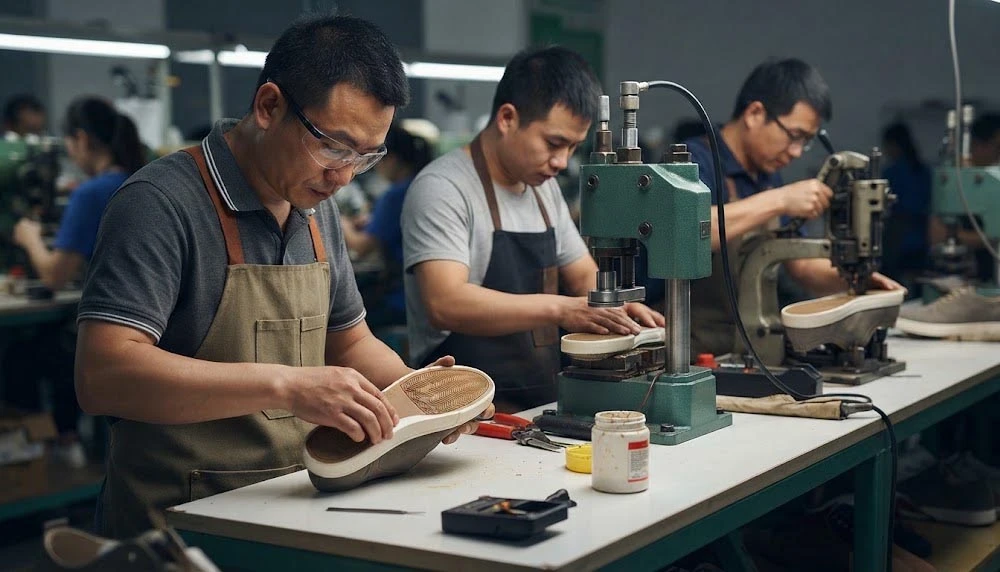
Backing our operations with 16 years of manufacturing experience, Okeshoe operates a standardized 10,000 m² production facility, 200+ skilled footwear craftsmen, and 10 automated production lines. Having developed over 1,000 custom shoe styles for more than 300 global brand partners, we hold deep technical mastery in sole engineering and upper integration.
Material Innovation and Eco-Friendly Outsole Options
Aligning with global sustainable trade practices, Okeshoe continually invests in material innovation. We offer eco-conscious sole options, including Recycled EVA and sustainable natural rubber compounds, paired with high-performance fabrics and recycled uppers to help partners deliver environmentally compliant footwear lines.
Certified Quality Control with Low 500 Pairs MOQ
Rigorous quality management forms the core of our business. Okeshoe’s manufacturing operations and products are certified by international third-party testing agencies, including SGS, TUV, and BV. With an annual capacity exceeding 1.5 million pairs, we support rapid replenishment orders while offering a flexible 500-pair MOQ to foster brand growth.
💡 Frequently Asked Questions
- Q: What is the minimum order quantity (MOQ) and quality assurance for custom soles at Okeshoe?
- A: Okeshoe supports custom sampling and bulk production starting at a low 500-pair MOQ. All factory shipments undergo strict quality verification certified by SGS, BV, and TUV, passing comprehensive lab tests for abrasion resistance, flex durability, and upper-sole bonding strength.
Ready to launch your custom footwear collection with high-performance outsoles? Contact Okeshoe today to get expert material advice and order your free sample!
| OEM&ODM Factory | Email: sandy@okeshoe.com | WhatsApp:+86 13328871615 |
Selecting between EVA and rubber outsoles ultimately comes down to aligning material properties with your brand’s core performance requirements and target consumer expectations. As a specialized casual shoes factory supported by 16 years of manufacturing experience, Okeshoe leverages robust R&D capabilities, a flexible 500-pair MOQ, an annual output of 1.5 million pairs, and SGS/TUV/BV quality certifications to deliver complete, premium custom footwear manufacturing solutions worldwide.