Key Takeaways
- Skateboard shoes need to balance abrasion resistance, grip, flexibility, and cushioning to meet different skateboarding and everyday wear requirements.
- Key components such as the upper, toe reinforcement, tongue, insole, and outsole influence overall shoe performance.
- Vulcanized and cupsole constructions differ in flexibility, board feel, cushioning, and structural support.
- Suede, canvas, synthetic leather, rubber, and recycled materials can be combined according to product positioning.
- Okeshoe provides OEM/ODM customization services, covering shoe styles, materials, soles, logos, and packaging.
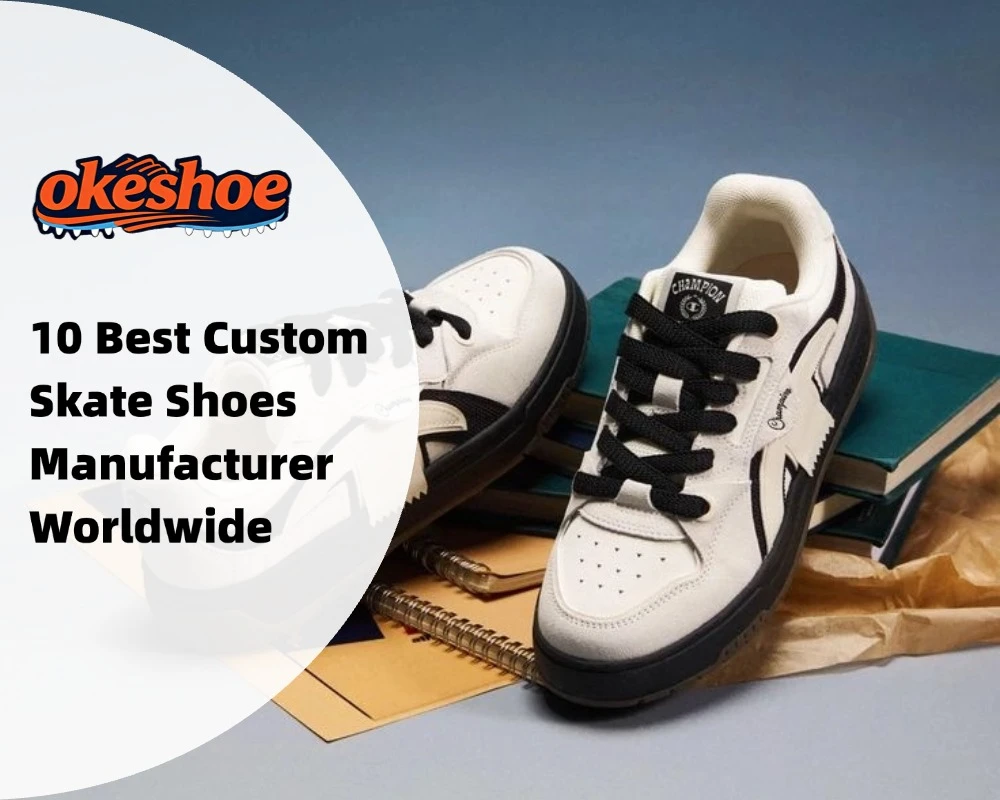
Skateboard shoes must provide more than everyday comfort. They need to withstand repeated friction, bending, impact, and landing forces during skateboarding. Upper durability, outsole grip, structural support, and board feel are important factors in product development and purchasing decisions.
For brands, wholesalers, and professional buyers, developing custom skateboard shoes requires careful consideration of shoe construction, material combinations, sole manufacturing methods, and supplier capabilities. Different product positions require different material specifications and manufacturing approaches. Understanding these factors helps buyers make more informed sourcing decisions.
This guide explores skateboard shoe market demands, key components, sole constructions, and material options. It also introduces Okeshoe’s OEM/ODM customization services to help buyers evaluate potential skateboard shoe manufacturers.
Skateboard Shoe Market: Performance and Streetwear Demands
Skateboard shoe development focuses on athletic performance, everyday wear, and brand identity. Different consumer groups have different expectations regarding construction, appearance, and material selection.
- Professional Skateboarding Performance: Frequent friction, quick turns, and landing impacts require durable uppers, reliable outsole grip, and stable shoe construction.
- Streetwear and Fashion Trends: Skateboard shoes have become an important part of streetwear. Consumers pay attention to silhouettes, color combinations, logo placement, and material textures, expecting shoes to combine athletic functionality with everyday styling.
- Product Differentiation: Brands create distinctive collections through upper panel designs, toe reinforcement, outsole patterns, printed graphics, and customized branding details.
- Wholesale Purchasing Requirements: Wholesalers and retailers generally focus on product variety, size availability, material consistency, purchasing costs, and reliable supply capacity.
- Customized Manufacturing: As brand positioning and sales channels become more specialized, OEM/ODM partnerships provide an effective way to develop exclusive shoe designs, adjust product specifications, and build recognizable collections.
💡 Frequently Asked Questions
What are the main requirements for professional skateboard shoes?
Professional skateboard shoes generally require abrasion-resistant uppers, reliable outsole grip, flexible construction, and appropriate structural support. The exact configuration depends on the intended skating style and target consumer group.
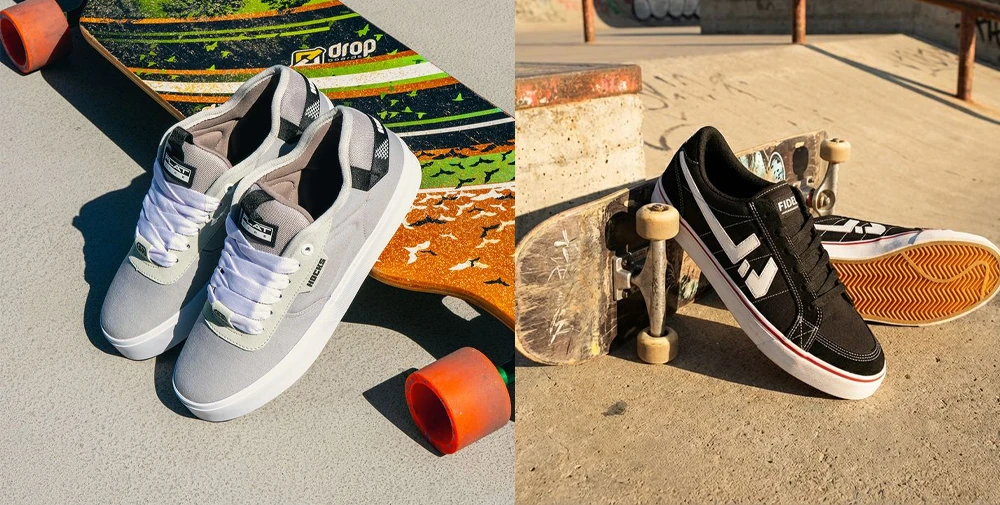
Skateboard Shoe Construction: Main Components and Functions
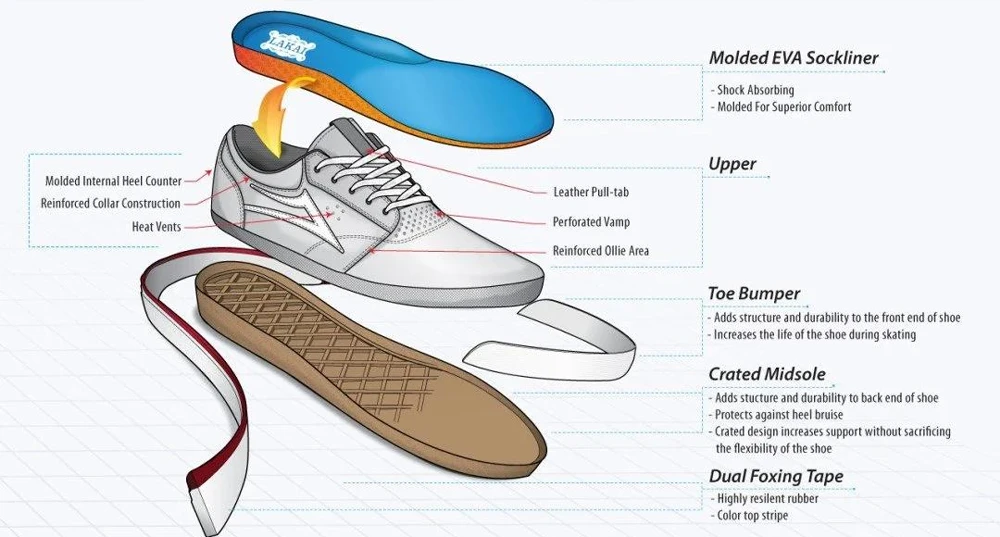
A skateboard shoe consists of several key components, including the upper, toe reinforcement, tongue, collar, insole, midsole, and outsole. Each component contributes to abrasion protection, foot support, cushioning, or board control.
- Upper: Forms the main body of the shoe. Common materials include suede, canvas, synthetic leather, and material combinations. The upper influences durability, breathability, and overall appearance.
- Ollie Patch and Toe Reinforcement: Usually positioned around the toe or other high-friction areas. Additional material layers or reinforced stitching help improve abrasion resistance in these critical zones.
- Tongue and Collar Padding: The tongue covers the lacing area, while padded collars improve the fit and comfort around the ankle.
- Eyelets and Lace Protection: These components secure the laces. Some designs incorporate reinforced eyelets or protective structures to reduce wear caused by friction with the skateboard.
- Insole: Directly contacts the foot and is commonly made with foam materials to improve underfoot comfort and basic cushioning.
- Midsole: Positioned between the insole and outsole, it helps absorb impact and provides structural support according to the design.
- Outsole: Directly contacts the skateboard and ground. Rubber is commonly used, while its formulation and tread pattern influence grip, abrasion resistance, and board feel.
- Foxing Tape: Commonly found in vulcanized shoe constructions, foxing tape covers the connection area between the upper and sole. It provides additional coverage and protection while contributing to the shoe’s appearance.
💡 Frequently Asked Questions
Which skateboard shoe components are most important for durability?
The upper, toe reinforcement, outsole, and foxing area are particularly important. Their material specifications, thickness, stitching, and bonding quality all influence the shoe’s resistance to repeated friction and wear.
Sole Construction: Vulcanized vs. Cupsole Skateboard Shoes
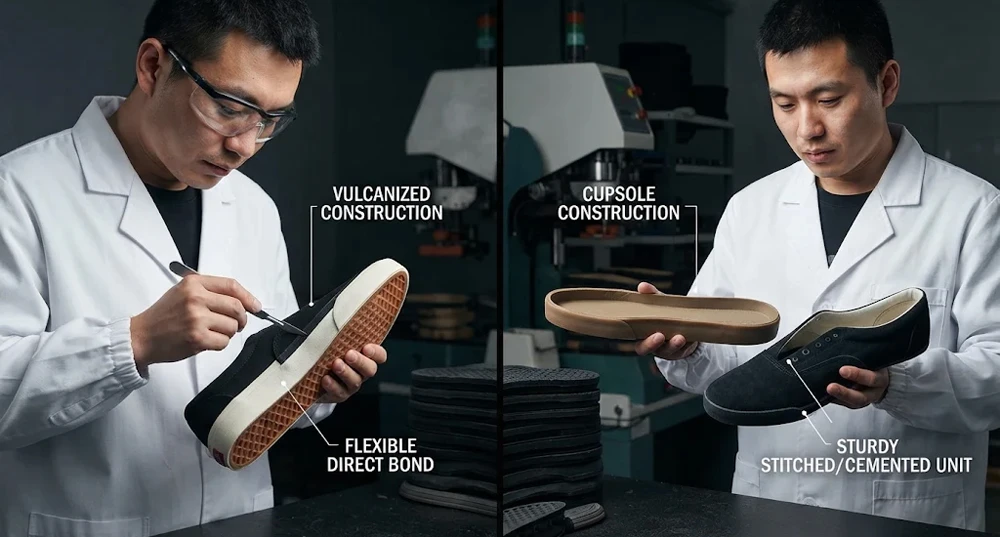
Vulcanized and cupsole constructions are two common sole types used in skateboard shoes. They differ in manufacturing methods, flexibility, board feel, cushioning, and structural support, making them suitable for different product positions.
| Comparison | Vulcanized Sole | Cupsole |
|---|---|---|
| Basic Construction | Upper and rubber sole are joined through a vulcanization process | A separate cup-shaped outsole is assembled with the upper |
| Main Manufacturing Process | Generally involves sole attachment, foxing application, and vulcanization | Generally uses cemented assembly, with some designs incorporating stitching |
| Flexibility | Typically more flexible and easier to bend | Usually thicker and provides a more structured feel |
| Board Feel | More direct board feedback due to its relatively flexible construction | Relatively less direct board feedback due to its thicker structure |
| Cushioning | Generally focuses on basic cushioning and flexible foot movement | Can provide enhanced cushioning through midsole and sole construction |
| Structural Support | Relatively lightweight and flexible, with support depending on the specific design | Usually offers more noticeable structural support |
| Main Characteristics | Classic appearance, flexible feel, and direct board feedback | Stable construction, greater cushioning potential, and stronger support |
Which One Should You Choose?
- Choose Vulcanized Soles: If the product targets consumers who prefer flexible movement, direct board feedback, and classic skateboard shoe styling, vulcanized construction is generally a suitable option.
- Choose Cupsoles: If the product emphasizes cushioning, structural support, and a thicker sole profile, cupsole construction may better match its positioning.
- Consider the Target Market: Consumer preferences for sole thickness, underfoot feel, and appearance vary across markets. Brands should select the construction based on their target customers and product pricing.
- Validate Through Sampling: Before mass production, evaluate sole flexibility, grip, bonding strength, and wearing performance to confirm that the construction and material specifications meet product requirements.
💡 Frequently Asked Questions
What is the main difference between vulcanized and cupsole skateboard shoes?
Vulcanized shoes generally offer greater flexibility and more direct board feedback, while cupsole shoes usually provide a more structured construction and greater potential for cushioning and support.
Skateboard Shoe Materials: Upper and Functional Material Selection
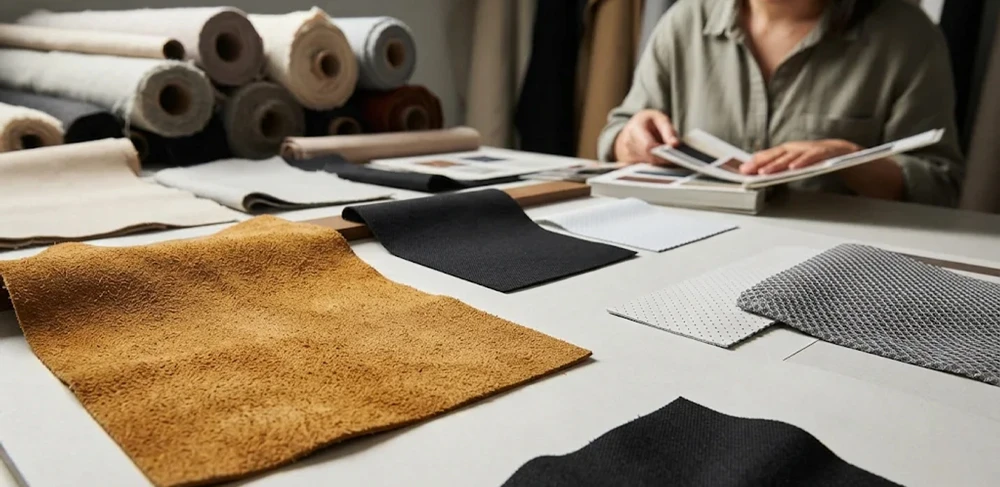
Material selection affects abrasion resistance, breathability, flexibility, and wearing comfort. Buyers should consider the product’s positioning and intended use when combining upper, outsole, and cushioning materials.
- Suede: Features a textured surface and good flexibility. It is commonly used on the toe, side panels, and other areas requiring abrasion protection.
- Nubuck: Has a relatively fine and smooth surface texture, making it suitable for shoe designs that emphasize material appearance and a premium look.
- Canvas: Lightweight and breathable, canvas is suitable for casual skateboard shoes and supports various printing and color customization options.
- Synthetic Leather and Mixed Materials: PU and other synthetic materials offer a wide range of appearance options. Combinations of suede, canvas, and mesh can balance durability and breathability according to design requirements.
- Sole and Cushioning Materials: Rubber is commonly used for outsoles, with grip and abrasion performance influenced by its formulation, thickness, and tread pattern. EVA and PU foam are frequently used in midsoles or insoles to improve cushioning and underfoot comfort.
- Eco-Friendly Materials: Recycled canvas, recycled polyester mesh, recycled rubber, and bio-based PU can support brands developing products with recycled or more sustainable material options.
Skateboard Shoe Material Selection Reference
| Material | Main Characteristics | Common Applications |
|---|---|---|
| Suede | Flexible with a textured surface | Toe panels, side panels, and uppers |
| Nubuck | Fine surface texture and refined appearance | Premium shoe uppers |
| Canvas | Lightweight, breathable, and easy to customize | Casual skateboard shoe uppers |
| Synthetic Leather/PU | Versatile appearance options and controllable material costs | Uppers and reinforcement panels |
| Rubber | Adjustable grip and abrasion performance | Outsoles |
| EVA/PU Foam | Cushioning and improved wearing comfort | Midsoles and insoles |
| Recycled Materials | Support environmentally conscious product development | Uppers, soles, and accessories |
When selecting materials, buyers should prioritize abrasion resistance, breathability, and appearance for the upper, while considering grip, board feel, and cushioning for the sole. Actual performance also depends on material specifications, formulation, and construction design.
💡 Frequently Asked Questions
What materials are commonly used in skateboard shoes?
Common materials include suede, nubuck, canvas, synthetic leather, rubber, and EVA foam. Brands can combine them according to product positioning, durability requirements, breathability expectations, and cost targets. Recycled canvas and recycled polyester mesh are also options for brands exploring more sustainable materials.
Okeshoe Manufacturing: Skateboard Shoe OEM/ODM Customization Services
Okeshoe provides skateboard shoe OEM and ODM customization services for overseas brands, wholesalers, and buyers. The company supports the development and production of different shoe styles, allowing customers to select materials, sole constructions, and branding options according to their product positioning and purchasing plans.
- Product Design and Sample Development: For OEM projects, production can follow customer-provided design drawings, technical specifications, and reference samples. For ODM projects, product development proposals can be prepared according to brand positioning, shoe style, and functional requirements. Samples can be used to confirm the silhouette, materials, colors, and design details.
- Vulcanized and Cupsole Production Support: Okeshoe supports different sole construction requirements. Sole types, materials, and assembly methods can be evaluated according to the product structure and intended use, with attention to flexibility, board feel, cushioning, and structural support.
- Customized Sole and Appearance Design: Sole colors, tread patterns, thickness, and appearance details can be adjusted according to brand design requirements. Projects involving exclusive sole molds or special structures can be evaluated based on the proposed product specifications and implementation requirements.
- Material Sourcing: Available material options include suede, nubuck, canvas, synthetic leather, rubber, and recycled materials. Customer-specified materials can also be evaluated for suitability, helping brands meet different product positioning and cost requirements.
- Branding and Packaging Customization: Customization options include upper logos, tongue labels, printed insoles, shoelaces, woven labels, and shoe boxes. These options help maintain consistency across shoe appearance, brand identity, and packaging.
- Quality Management: Quality control covers key production stages, from raw material inspection and in-process checks to finished product appearance and specification verification. Third-party testing can also be evaluated according to order requirements, with specific arrangements subject to the selected testing items and actual reports.
Okeshoe Factory Capabilities
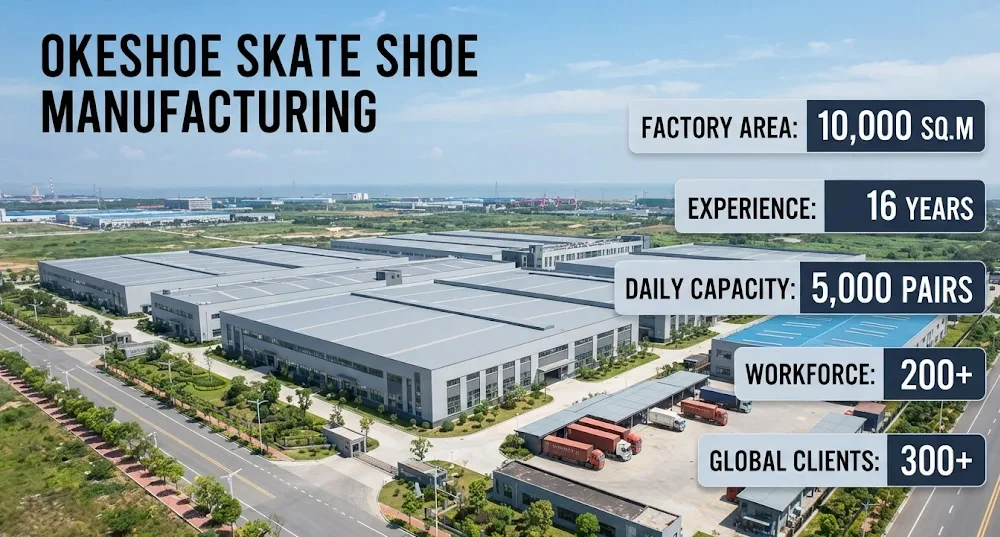
Okeshoe operates a manufacturing facility covering 10,000 square meters, with 16 years of footwear manufacturing experience, more than 200 production workers, and 10 production lines. Its annual production capacity exceeds 1.5 million pairs, and it has served more than 300 customers worldwide. The minimum order quantity (MOQ) for customized orders is 500 pairs. Okeshoe can provide corresponding OEM/ODM cooperation solutions according to customer product positioning and purchasing plans.
💡 Frequently Asked Questions
What is the MOQ for custom skateboard shoes at Okeshoe?
Okeshoe’s MOQ for customized skateboard shoe orders is 500 pairs. Specific product configurations, material selections, and customization requirements can be discussed according to the design and purchasing needs of each project.
Get Custom Skateboard Shoes Solutions from Okeshoe
If you are developing your own skateboard shoe brand or looking for a manufacturing partner for OEM/ODM production, Okeshoe can provide customization support covering material selection, sole construction, branding, and packaging.
With 16 years of footwear manufacturing experience, 10 production lines, and an annual production capacity exceeding 1.5 million pairs, Okeshoe offers manufacturing cooperation solutions for overseas brands and wholesale buyers. Contact Okeshoe to discuss your product designs, sample development, and bulk purchasing requirements.
| OEM&ODM Factory | Email: sandy@okeshoe.com | WhatsApp:+86 13328871615 |
Skateboard shoe development requires a comprehensive understanding of shoe construction, upper materials, sole manufacturing methods, and target market requirements. Vulcanized and cupsole constructions serve different product needs, while the appropriate combination of suede, canvas, rubber, and recycled materials helps brands develop distinctive product collections.
For brands and wholesalers evaluating a skateboarding shoes manufacturer, choosing a partner with relevant footwear manufacturing experience, material sourcing capabilities, quality management processes, and OEM/ODM support can improve product development and purchasing efficiency. Okeshoe provides skateboard shoe customization and bulk production support for international customers.